The Nation’s Correctional Staffing Crisis: The Toll on Incarcerated People

Recently, the editor of Brilliance Behind Bars was called before the U.S. Senate to give testimony on the understaffing crisis effecting prisons nationwide. She represented our interests with great compassion and much needed perspective. It is now our turn to support her efforts with our own experiences and insights. Let’s allow the public a real glimpse into our struggle as incarcerated people living in a prison understaffed…

For decades, prison has been held as an institution designed to mete out punishment to “evil-doers.” As time has progressed, so too did the caricature of the inhuman prisoner within the social conscience of the public. This depiction has led to a dangerous lack of concern for prisoner security, treatment, and adequate staffing to conduct daily, essential operations.

In the wake of the Coronavirus Pandemic, no areas of industry was left unscathed by understaffing issues. But there is a stark difference between the need for fast food service workers to tighten up lapses between combo meals served to various customers and the need for correctional staff to maintain the order and operation of a coercive institution and its hundreds of long-term residents.

Correctional facilities are more akin to state hospital and nursing homes fundamentally, being that its residents are forced to stay in such facilities. Residents of these type of facilities are solely dependent on the facility to provide critical medical care and treatment programs designed to aid in social and psychological health and development.

Given that prisons are institutions filled with residents living in close quarter communities, lack of proper staff often leaves responsibilities of security and treatment to fall to the hands of other prisoners. I, myself, have even had to serve as an interim first responder during medical emergencies involving other incarcerated. Ironically, the institution has enacted policies to deter the incarcerated from lending aid to others, but have yet to solve the very real crisis of understaffing in prisons in this state and nationwide. Also worthy of recognition is the incarcerated community’s drive to create treatment programs amongst themselves in spite of the lack thereof provided by the facility.

It is well documented that some private corporations have exploited the widely accepted practice of understaffing prisons in order to increase their profit margins. Although, we cannot exclude the fact that this was made possible by governments diverting interest in funding prisons as institutions of rehabilitation, and opting to view prisons as human warehouses for the disadvantaged. This is a framing that is more favorable to the rhetoric on the economic benefit than actual social benefit. Also, it’s no secret that working in a prison isn’t the most desirable work environment.

2020 did not cause prisons to be dangerously understaffed. 2020 only unveiled a deep-rooted practice that has been the void of compassion for human life for over 25 years in the making. The current state of prisons in America are echoes of the prison ‘reforms’ of ’95. Thirty years later, we clearly see the product of debased political agendas and public susceptibility to crime-based propaganda. That is, mass incarceration, a nationwide prison understaffing crisis, and instability socially and economically.

Note: I do not wish to end this writing without stating how very proud I am of each and every one of the incarcerated who have utilized their time and effort seeking not only the rehabilitation of themselves, but also that of their fellow incarcerated. Each member of the incarcerated population was forced into this situation and have so much stacked up against them, but these individuals have maintained the strength in spirit and the depth of human will that is undeniably world-changing. I pray that each one of you find your freedom physically one day, because you have already achieved a level of freedom mentally that few will ever experience.

Your spirit is tried and your spirit is, without a shadow of a doubt, TRUE. You are the torchbearers–your light leads the way through some of the thickest darkness known to the civilized world…

Love and Peace,
Q

Prompt: As mentioned above, we want to know about your experiences. Feel free to free-write, or to use the thought starter questions below:
1. How has short staffing affected your livelihood as an incarcerated individual?
2. What do you think is the cause of understaffing of prisons nationwide?
3. Are there any highlights of positivity that you have witnessed during your incarceration in regards to staffing?


Education: A Key to a Prisoner’s Complete Freedom

Knowledge has long been revered by leaders throughout the ages as the path to freedom. Knowledge is the initiator of mankind’s inevitable enlightenment. But as it had been cultivated, trained, honed and thus educated it had rendered such sophistication as that found in our modern day society.

Since the longstanding practice of fire by light has sustained humankind and literally brought them out of the wilderness, education as a path to freedom stands true – in not only the actual sense, but also the proverbial and non-proverbial.

A miseducation can be rightfully referred to as an education not fixed upon freedom. The cause of a miseducation is predicated on the complete opposite – it is created to ensnare, to hold captive, to limit, and control. Granted the grace of reason, miseducation may falter and give over to greater. But to be ignorant – uneducated – that is the void of all hope and the absolute absence of power. None of us enter this world without paying our debt to ignorance – and since education is in itself a training, no one can hope to be born a master.

I, myself a mere human being on the verge of my 36th year of life am only starting to realize that education, in abundance, is crucial to achieving the most out of the human experience. Almost 20 years from being that stereotypical degenerate high school dropout, I pursued the same education I strived so diligently to avoid. Not only that, its at the sake of my own redemption. Incarcerated, I am able to work on a career in the legal profession. After experiencing the wrath of the American justice system firsthand, I hope to help restore communities by advocating for them in areas of law. The way I face my incarceration today, nearly at the end of a 20-year prison sentence, is with hope and aspiration. This is due to the last few years of me actively pursuing educational goals in a field that interests me.

The system is not oblivious to the value of education in the rehabilitative process. many states and federal correctional facilities offer GED and trade vocation courses, but educational opportunities in a wider field of industries and interests can be more than sustaining – they could be transformative. For too many incarcerated, those types of educational opportunities are almost impossible without help from sources outside of prison (family, loved ones, non-profits, etc.) I even enlisted the help of my now fiance’, where we managed to find an Sallie Mae educational loan with minimum payment of $50 a month. That was completely manageable with my institutional work check.

My rehabilitation reached its highest point once i could see my future through the lens of education and the freedom it had to offer. Higher education opportunities made widely available to the prison population has the potential to create the view of ‘corrections’ as an administration that enhances our communities, not destroy them. To have any hope of freeing the world, we must first focus on un-imprsioning our minds and free ourselves of the preconceived limitations falsely placed on the human spirit and its potential for redemption. If allowed, this prismatic form of thinking will continue to hold us back from the apex of social development and our advancement forward as a more unified force.

Love & Peace,
Q

The Budget’s Body Count

I stood in the pod and listened to WRIC Richmond 8News as they reported that VADOC plans to close four of its state facilities and assume control of its now only private-ran prison, Lawrenceville Correction Center, back from GEO Group. These plans are to take effect in 2024. Allegedly, this proposed course of action is in response to the staff shortages, the sharp spike in drug overdoses, and drug overdose related deaths.

What continues to elude me is that given all the reports and coverage, there is not one utterance of the apparent correlation between the increasingly lethal conditions befalling the incarcerated and Governor Youngkin’s budget that keeps the prison population unnecessarily high and extremely vulnerable to the effects of the deadly fentanyl epidemic.

It is evident that the ENTIRE world was ensnared in the chaos brought on by the Cornanvirus Pandemic. This should not exclude the fact that the immense adverse effects on the mental, physical, and emotional scapes of people did not fail to reach us here in prison. Reasonably, the struggles stood to endure by the public were undoubtedly intensified by the conditions of incarcerated living…

As sickness ravaged the public, the prison population suffered the amplified effects of disease associated with cramped living conditions. As the economy experienced joblessness, the prison experienced a lack of security staff and thus a harmful lapse in overall security, jeopardizing the health and safety of the entire incarcerated population.

The country, as a whole, is still enduring a mental health crisis. The only difference between the public and prison is the availability of professional psychiatric help for the incarcerated. Alongside the fact that prison, in itself, is a major mental stressor. Without proper counseling and a fertile, constructive environment, such mental stress is bound to convert into substance abuse. And in turn, a substance abuse habit has become a much more lethal coping mechanism in the midst of the fentanyl epidemic.

I guess the task of protecting the people, entrusted to our state leaders, doesn’t extend to the many human beings excessively incarcerated by a broken system. Or maybe state leadership, headed up by Governor Youngkin, could not properly assess these critical factors behind the very real blinders of polarized, partisan politics. In any case, the budget amendment could be seen as mere political maneuvering, but given its very lethal effects, the call to stay thousands of me and women to excessive prison sentences has proven deadly.

I have been incarcerated well before the abolishment of the death penalty in Virginia. That has not sheltered me from the continuous heart break time and time again having to witness the needless death of men whom where never expected to die in prison… Those whom just the simple support of home, family, or professional counseling could be here today.

Though many of us in prison are here because of the choices we’ve made, none of us remain here under the strength of our own volition. Excessive sentencing, political gaming, and human profiteering has held us captive in what is becoming an even greater deathtrap than ever before…

There is always a price for power. The price for political power in this instance, has been at the very affordable cost of human lives…

Love, Peace, and Power
Q.

Prompt:

Have you noticed the uptick in overdoses in your respective facility? How has this affected you and those closest to you?

Due to the budget amendment, a large number of people have been blocked from going home. Do you think that contributes to the uptick?

How can we as incarcerated people help with the drug crisis within the prisons?

What do you think the prime agents are that contribute to substance abuse in prison? And how can state leaders address this problem?

Redefining Power: Your Voice is Our Vote

It is of the greatest contradictions anyone in modern day society could endure — to be on the wrong side of the prison bars and have to witness top lawmakers and administrators deeply entrenched in legal troubles. Not troubles perpetuated from a presumption of negligence concerning the workings of their office, but troubles of a more devious, deliberate criminal nature. To further their mockery of the law, they are accused of abusing the power of their respective offices to aid in covering up their foul play.

Our country has spent centuries using prison as a tool of political intrigue. As a nation, we have actively littered the prison yards with the social lepers and political scapegoats of the modern era. Most of these unfortunate souls can trace the origins of their incarceration to a sense of social ostracizing and economical hopelessness. In turn, what factors can the most powerful, most privileged members of our society attribute to their criminality? The stark contrast between the common criminal and “perp” politician brings to mind the philosophical premises governing the difference between ignorance and evil and their role in the wrongdoings of the world. On one hand, ignorance brings about wrongdoing because it is fearful and deprived of power. Evil, as it stands in relation to ignorance, utilizes its power and knowledge to perpetrate wrongdoing. From a position of power, evil thrives on the suffering and increases the wrongdoing of the ignorant.

Corruption is established on this particular ecosystem where the powerful prey upon the less powerful. This dynamic has tainted American politics and has constructed a predatorial culture where it is socially acceptable to sacrifice certain out-groups to bigot political platforms (such as tough on crime, white nationalism, and prison privatization) under the guise of financial security and economical prosperity. All the while, these dark political agendas serve to drive a deeper divide in the only true shield of the common citizen — UNITY. For far too long has the political system been used as the arm of America’s elitist class — sowing dissension — pitting poor against poor, and lower working class folk against migrates, as we all struggle for the scraps that fall from the corporate juggernauts’ table.

But how can we stop this ponzi scheme erected at our expense? Public indifference has always incited the dark agendas of corrupt leaders who offer oversimplified solutions to complex problems. These quick fixes seem harmless enough on the surface, but if one just takes time to get a closer look, we can see the fine print that greatly serves some elitist’s bottom line. Like the leaders of the Confederate South post-Civil War, corrupt leaders like to displace animosities for bad government toward less threatening targets: minorities. The public should be demanding utmost transparency from their leaders, not more political propaganda that’s fixed around the current hot-button issues.

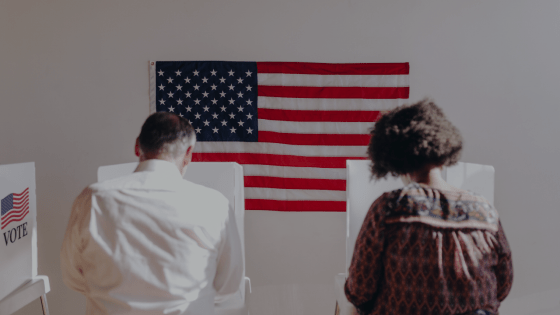
Regardless of any foolproof solutions posed for the individual citizen to execute, not even a perfect plan or strategy can be the least bit effective without getting good, honest leaders into office. Currently, we as incarcerated people cannot vote; but we have plenty of friends, family and loved ones who can. We can help them make the best choice by guiding their research and keeping our ears and eyes open for candidates that serve in the interest of our cause. Oversight, second look, ending mandatory minimums, expanding earned sentencing credits, ending profiteering in prisons, and the list goes on. State elections in Virginia are November 7th. We have plenty of time to get our allies engaged. If you can reach out to 3 people and ask them to reach out to 3 people, and make sure they have plans to vote early, or on November 7th, you can truly make a difference.

The Struggle Never Stops, So Neither Can We.
Peace, Love, and Power,
Q. Patterson

Prompt for the Incarcerated:

How will you make sure you can extend your vote and engage people on the outside to vote?

What are some of the issues you care about that may or may not be on the ballot and why?

If you had the opportunity to speak directly to potential voters, what would you say to convince them that their vote truly matters?

A lot of campaign ads today are focused on gun violence and high crime rates, are there any arguments you (as an incarcerated person) could pose to potential voters that can debunk the assumption that progressive CJR is responsible for the perceived uptick in violence and crime?

July Prompt: State Leaders, Mental Health, and Incarcerated Lives

It’s been an entire year since the VA governor’s 11th hour budget amendment that denied thousands of hopeful incarcerated people and their families long-awaited relief from Virginia’s harsh practice of over sentencing. The sudden walk back combined with the already adverse conditions (i.e. the Coronavirus Pandemic, Fentanyl, etc) plaguing the penitentiary have caused serious stress for some – myself included. This elevates the every day stressors of prison life from a common occurrence that can be remedied with moderate time and care, to a contest of will that can have lethal consequences for the defeated.

The prison yard has been relatively quiet, subdued by the jerk and pull of politics and the overwhelming sense of powerlessness. Dejected prisoners have not mustered the spirit to organize in light of all the work that has been done on their behalf in the past few years. From personal experience that spans a decade and a half, prisoners do not expect things to change and the past year has reinforced feelings of injustice. These feelings have been suppressed for the most part and redistributed to expressions that firmly place prisoners deeper into prison life and further from productive, prospective ways of thinking.

For me, the past year has been a crash course in environmental influence on mental health and how this is so essential to effective rehabilitation. It has also raised an important question in my mind: How much weight do our state leaders place on the mental wellness of its incarcerated? How much weight to they place on mental wellness and public safety?

State Democrats decided not to readdress Enhance Sentence Credits in this year’s General Assembly — predicting failure to pass and further unnecessary stress on prisoners and their families. Currently, the matter of Earned Sentence Credits and the Governor’s walk back of eligibility is being heard by the VA Supreme Court. This process can take quite some time to be decided. Other alternatives to relief include: expiration of the budget amendment in June 2024 (and hopefully its not reissued by the Governor and House), or The House gains enough Second Chance members in the upcoming election to push a bill through. This form of alternative also cannot be effective till 2024.

In the meantime, what do we do about the immense mental stress that is pushing prisoners to very bleak brinks — increased agitation, physical altercations, deep depression, and drug overdoses? Each of these issues have been exacerbated by Governor Youngkin’s political agenda and toying with human lives…

-Q, July 2023

Prompt Questions (Thought Starters for the Incarcerated Population):

  1. Can you identify any extra stress brought on by the governor’s budget amendment; for you, your environment, loved ones at home, or friends/family on the inside?
  2. How can the state better use resources in order to address the mental health of incarcerated people?
  3. What may be some key ways to deal with elevated stress while incarcerated?
  4. Can you think of any alternative ways the prison community can view the legislative process to better cope with changes like that of governor Youngkin’s budget amendment?
  5. What can we do as incarcerated people to ensure that we put the right people in office who care about our lives?

What’s Free 2023!? – Voting.

Editor’s Note: What’s Free is a column that began in 2020, that asks the incarcerated community what freedom means to them. Inspired by the movement of enhanced earned sentence credits, we have raised the topic every year to keep the momentum alive as more brothers and sisters remain behind bars in the Virginia prison system. This year, Q has decided to talk about the freedom that comes with participating in our political system.

Virginia criminal justice reform has been shifting back in forth between a full, most needed overhaul and virtual crumbs to keep the majority of our loved ones seeking more from our state leaders. This year though, one hundred seats in the Virginia House of Representatives are up for reelection. This is where the power of the vote will have its greatest chance to reflect the voices of the incarcerated in the form of our loved ones active participation in the voting process.

When it comes to voting and change as a whole, all of us who have been dejected by the losses we’ve taken must be wary of a most destructive attitude – political skepticism – which only serves to keep the chains on the mind, soul, and in our case, the body.

It’s no secret: every stride gained in regards to who gets to vote in America, has come by way of combat. Normally, this form of combat has placed minorities in position of a proverbial David versus the very real Goliath of bigotry and racism. Continuous combat of this nature will leave a sense of dread and despair no matter how many times we have overcome…

For example, for the last 10 years, Virginia governors fought to ease the path to Restoration of ex-felons rights. In a single term, Glenn Youngkin secretly rolled back automatic expungement without ever addressing the public about the change. But why? What does Glenn Youngkin have to fear from a fuller version of the right to vote? He has to fear YOU!

Political skepticism is the biggest threat to change. Feeling like your vote doesn’t matter, your voice won’t change anything, that the vote is ‘rigged,’ are all thoughts that trap you in a form of political slavery where you willingly give up your fate to the hands of those who’ve already condemned you.

We’ve already heard the stories about how vicious southerners became when former slaves were granted the right to vote. Through those acts of brutality and intimidation, we can surmise how important and powerful the vote is in this country. Even in modern day – look at how Donald Trump played with the idea of the vote being rigged to charge up his base and turned them on the capitol.

Minorities often complain about how politicians are constantly pandering them – encouraging them to get out and vote for them – yet minorities are still skeptical about whether their vote even matters. The fact is that Democrats need a large portion of the minority vote to win the presidential office in any given year.

Let’s look at it this way: if the vote is real (which I most certainly believe it is), then not going out to vote has very real life-costing consequences. The greatest threat that must be overcome is the captive thinking of political skepticism.

What’s Free!? Freedom in this country looks like every single American voting in EVERY election – whether they’re an ex-felon, incarcerated, or free.

-Q

Prompt Questions (Thought Starters for the Incarcerated Population):

  • Can you identify examples of political skepticism in your every day life? Does it affect you? Why or why not?
  • How do you feel about the recent changes Govorner Youngkin made to the restoration of rights?
  • Being ineligible to vote yourself, how do you plan to be involved in the upcoming state elections for the Virginia General Assembly members?
  • How do you think that society can benefit from every American being able to vote?

“The Capitol is Being Stormed!” -Q.Patterson

Brilliance’s annual ode to black history has me checking the archives again for a bit of Hov. We are two years post wake of the January 6th Riot, and Jay Z’s take on the event still strikes every part of me that remains utterly disgusted with what took place that day…

“You let these crack-ahs storm ya capitol and put they feet up on ya desk/ and you talking tough to me? I lost all my lil respect.”- Jay-Z

“What It Feels Like” is the title of the track Jay featured on with the late great Nipsey Hussle. Here is where Jay felt the need to address the government and there handling of the January 6th riot compared to how the country continues to treat its black citizens with blatant injustice, violence, and death.

Some could easily take this statement as anti-government, but I see it as a patriot’s expression of great disappointment in it’s country. Most of America and the rest of the world witnessed America under siege.

Most cannot disregard, though they won’t to be forthcoming enough to admit it, the reality that if the insurrectionists had been predominantly of another race, the classification of a riot would have had to take a backseat to what would have been a race massacre… Now the problem isn’t with the potential of a massacre actually happening, but the fact that race holds such a stranglehold on our country’s mind. Race holds such a stranglehold on the minds of Black Americans.

As a Black American Man, I feel as if I could see it unfolding right before my eyes– minorities being violently subdued and put to death on the spot for having the sheer audacity to storm the capitol of the united states. Heinous, but sadly, it is something black people actually fear would have happened.

Jay-Z raises a voice in defiance of such fears, while pointing out the unfair treatment that continues to eat away at the integrity of this country. Jay uses his immense platform to rally the Black populace to demand the respect of its government.

I, for one, feel that Black Americans do not do enough to hold the government accountable. Jay looks to lead that way for others who may feel a little dejected by January 6th, but he doesn’t invoke despair or an increased awareness of white supremacy. He ask for anger and assertiveness. He wants Black Americans to know that they are worthy of just as much respect as any other race in America…

I agree.

-Q. Patterson

Black America Inside Out ’23

Words from Q:
It has been 3 years since the team at BrillianceBehindBars.com set out to show the world that there are living, breathing, intelligent men and women incarcerated and worthy of a voice.

In this short time, Brilliance has gained a multitude of incarcerated contributors spanning several prisons and correctional centers across Virginia. Brilliance has continued to provide a unique platform for incarcerated voices to sound off on current events affecting their lives and the lives of their families. We have even gained the attention of several Virginia state legislators! To top it all off, a group of our contributors have been actually able to meet with state officials!

Brilliance continues to build with the hearts and minds of the incarcerated at its center. We are being noticed. We are being heard. We are here because of all the work of our team and incarcerated contributors. I’m proud of what our community has been able to accomplish, but the struggle never stops, so neither can we. Let’s keep it going!

Please continue to encourage your loved ones to get active and support the efforts of our freedom fighters who keep our voices and faces front and center of the media, the public, and VA lawmakers. They ensure that we are not forgotten…

Continue to spread the love for your fellow incarcerated. None of us want to be here, but since we have to, let’s be creative, constructive, and uplifting. Do the time, don’t let the time do you.

I have great love for all of you and your families.

Love, Light, and Godspeed,
Q.


BlackAmericaInsideOut ’23 Assignment – 3rd Year

Participants are asked to take a quote from a prominent Black American figure, past or present, and write a short essay, compose a poem, or any type of written creative work explaining what that quote means to you and its relevance to our current situation in this country…

Remember: Add your name, number, and where you are from. People may see your submissions, so let em’ know who you are.

Re-Slaving America (Make America Great Again!?)

It’s a horrible sign that the country of America might actually be going backwards– towards the wrong direction… was this what was meant by the 2016 dog whistle calls to ” Make America Great Again”…?

Five states, here in America, are putting a rather interesting bill on their ballots this midterm election season… Alabama, Tennessee, Mississippi, Oregon, and Vermont are all trying to reintroduce “forced labor” back into the American penal system. This situation makes this month’s Brilliance writing prompt somewhat prophetic…

“Am I incarcerated for profit?” (Brilliance writing prompt for October 2022) detailed the very gruesome history of the many insidious ways the powers of this country have exploited the American justice system and configured it into a racist pitfall (a “black hole”). All of this, in an effort to re-enslave black people, subjugate American minorities, and further the seemingly impenetrable grip racism has on this country…

Maybe the powers are going to decided to use the cover of a poor post-covid economy to bolster the need for slavery in prisons? They’ve already put forth the footwork for the past four years and successfully weaponized a fringe base of poor, white people, armed and even ready to storm the capital — maybe in hopes of taking the country “back” to “make it great again?” It is easy to accept the state of the economy as broken or unfit by those privileged but in poverty. But to those who have aligned such privilege with financial success and are now in want more, pointing them in the directions of the prison system as a means for their salvation is a welcomed fix.

Maybe the minimal headway made on social justice reforms leaves most with an unmerited sense of self satisfaction? So much that they aren’t even the least dissuaded to publicly disregard the mental wellness of Black Americans by resurrecting their most critical of traumas.

I hate that the connotation of capitalism can be justifiably understood to mean: at times we sacrifice long term mental anguish in hopes of short term monetary gains. and in a democracy like ours, this expense tends to always fall on the minority.

Why is forced labor in prisons an issue of race?

Well regardless of what our leaders are touting as true social justice reforms, the dramatic disparities in incarceration rates are still very well alive and thriving. the emphasis on racial justice, these past two years, has barely put a scratch on the issue of unfair treatment between minorities and the penal system. Black Americans still greatly outpace white ones in America’s prison population. And as described in the latest Brilliance prompt, the current state we are foregoing in this country concerning Black Americans and prison was deliberate in its design.

Given the recent events taking place within the Alabama prison system– where the incarcerated there are demonstrating a work stoppage in protest of inhumane living conditions and unfair treatment by the Alabama justice system, the fact that Alabama is amongst the states considering forced labor is nothing other than a symbol of its stern unwillingness to consider to the pleas of its prisoners. A bold statement that power is in no need of a heart nor soul. It only needs lives to stand over…

My hopes are that these aversive proposals to enslave prisoners do not go further than just racist propaganda, designed to motivate alt-right fringe voters to the polls.

If this horrible, racist. vision does manage to make it to fruition, my hope then is that the human soul that will forever fight for equality and justice, beats loudly throughout all the hearts of the oppressed and imprisoned, and that of all of their allies, and stands in opposition of such travesty…

Continue to fight for righteousness, because it is not freely given. We are all the children of freedom and it is our birthright to be free…

Love, peace, and power,

Q. Patterson

Am I Imprisoned for Profit?

Editor’s Note: Quadaire has been on a long lockdown for the past few weeks, and spent some time researching the deep roots of mass incarceration. He wanted to share the facts he learned and engage the incarcerated population in Virginia.

Since its conception, America has benefit from free labor and the industry of slavery. Slavery has long been abolished, but the clause of ‘supporting it in cases of punishment for a crime’ has been continuously exploited by corporations and politicians. This has lead to the modern day social crisis of mass incarceration and the lucrative enterprise of the prion industrial complex.

Post-civil war, disgruntled Southern lawmakers sought to evade the parameters laid out by the Reconstruction Amendments (Amendments XIII, XIV, and XV). They used the exception marked out in the 13th amendment that legalized slavery in case of punishment for a crime as the basis for achieving their goal. Incarcerating former slaves disqualified their newfound citizenship, nullified their voting rights, and returned them to chains and involuntary servitude. These Southern lawmakers legislated numerous laws and policies such as “Race Codes,” “Black Codes” and many more targeting former slaves for incarceration. White Southerners effectively weaponized the law to enlist America’s Criminal Justice System as a device to perpetuate slavery under other names.

One of these reimagined forms of slavery mirrored a pre-civil war program used in Louisiana, known as “convict leasing.” Incarcerated prisoners were leased to private companies and plantations as laborers. Ironically, these programs were often many more times dangerous than slavery conditions prior. Private companies held no direct investments when it came to their leased laborers. Unlike former slave owners who stood to lose money if the slaves were to get horribly sick or die, private companies with leased convicts were less dissuaded to put them in very unsafe and hostile environments. Convicts were more harshly abused, and in many cases, company task masters would drive them to their deaths. Since the convict leasing program was facilitated through contracts between the prison and the employer, when a laborer died, the prison would simply replace them to meet their contractural obligations and business resumed as usual.

Convict leasing took numerous lives before it was outlawed. Eventually, the program was replaced by ‘correctional enterprises’ — state-owned companies that used prisoner’s forced labor. Correctional enterprises used prisoner labor to manufacture a number of products ranging from eye glasses, shoes, and state license plates. Correctional enterprises are still widely used today. While they gross multi-million dollars a year, their workers, incarcerated peoples, average to earn about $1 per day to take care of themselves and in many cases, their families.

The prison industrial complex has thus evolved. Today, the highest grossing business fueled by the incarceration of Americans is that of the private prison sector. Private prison corporations gross multi-billion dollars a year. The business arrangement set between these corporations who provide incarceration services to the governmental agencies that employ them is a simple one: Incarcerated service providers supply bed space to state and federal agencies and must meet a quote of occupants in order to satisfy their contracted obligations. The most sinister part of this dynamic is the corporations that provide private prisons are publicly traded on the stock market. Thus, anyone and everyone, even law enforcement officers can profit from an increase in the incarceration rate.

One more interesting concept to identify in the scheme of prison for profit is a little more subtle than others. In 1994, 10 years after the first installation of a private prison, the Clinton Administration enacted the Crime Act. This piece of legislation awarded incentives to the states who get more severe on crime. The Crime Act inadvertently encouraged systemic racism with monetary gain and further the profit-for-prison dynamic.

In a perfect world, we can see the logic in society profiting from anti-social acts such as crime. But in America, our racist past infects our criminal justice system to its core. Post-Civil War and Jim Crow politicians have taken advantage of that notion from the onset of the Emancipation Proclamation. Segregationist politicians worked hard to frame the tactics of the civil rights movement as ‘crime running rapid in the streets’ and spawned “tough-on-crime” politics that still serve as the breeding ground for dog whistle politics today. (as defined in Rethinking Incarceration, as racial legislation ensconced within coded rhetoric about the common good)

Never forget that the American justice system is built on principles of the slave trade, monetary gain at the cost of human lives. Everything from the low cost, low quality food being served in prison mess halls, the highly marked up nearly expired food products being pushed through commissary, excessive price tags on essentially free services such as emails, all combined with state-sponsored monetary incentives for persecuting felony charges, keeping an ample incarceration rate, and cutting corners on a bare essentials are all aimed at profiting of human lives…

All of this takes place under the guise of sound economical principles, public safety, and justice for victims, but just as slavery was regarded as a noble conquest in the eyes of many Americans, profiting from the misfortune of already poor, disparaged people is nothing more than vile, life-costing capitalism.

Quadaire Patterson

Thought Starter Questions for the Incarcerated:

Write your own essay, poem, or submit art relative to this topic. Do not forget to include your name and any contact information for any readers who may be able to offer you some assistance.

  1. Do you believe it is possible to overcome hundreds of years of slave trade mentality in America and your lifetime?
  2. Crime must be addressed in order to have a functional and productive society. How can society better use the prison system to work for those incarcerated and the general public?
  3. How can the prison system be used to serve communities?
  4. Do you believe that mass incarceration is racially motivated due to the past? Why or why not?
  5. Do you believe America can survive without the use of slavery in one form or another?