The Cycle of Victimization

When will we, as a country, began to see crime as an extension of a vicious cycle of victimization?

I myself – a ‘convict’ – have been beaten, abused, shot, and stabbed… ridiculed, rebuffed, and victimized. None of my assailants were arrested, or put to trail. Even now, I do not wish the harshest of punishments to befall them. I wish only for a chance for their hearts and minds to be changed…

When I see people who have been victims of crime profess that the people behind bars should face more punishment, I wonder to myself how easy it is for people to forget that they (the ones incarcerated/the “criminals”) are victims themselves: victims of financial oppression and social oppression, victims of mental illness, victims of emotional dilapidation. It’s so easy to ignore the voices of those victims… easier to sacrifice the tears of ‘con-victims’ to appease the ‘real’ victims.

Do not misunderstand, I do not disregard their loss or abuse. NO ONE should have to go through such, life itself is hard enough. I merely want to offer a perspective that may hopefully open the mind’s eye and get us on a path to ending m the vicious cycle of victimization.

I hear the testimony of state senators about constituents as victims of rapes and murders. I also hear the testimony of incarcerated constituents as victims of molestations, fathers and family members lost to wrongful deaths, poverty and abusive upbringings… what I see, what I hear, rings a tone of hurt people, hurting people… is it right? NO. But neither is the outlook that the prisons that span this country coast-to- coast do not house the majority of the greatest victims of society.

This is an injustice that will only serve to further the vicious cycle of victimization… and continue to cost lives… to the grave of the prison system.

– Q. Patterson, BrillianceBehindBars Creator, #1392272

Black America Inside-Out, the Sequel

Happy 1-year anniversary to Brilliancebehindbars.com! A year ago, we at set out on a journey to show society that incarcerated individuals were living, breathing, thinking human-beings, full of latent potential and intellectual prowess. Since then, our country has experienced the worst of it’s times. It has been hit with a highly contagious and deadly pandemic and governmental upheaval, widening the gap across race and political lines… but our mission to humanize and secure scholarships for incarcerated citizens has not slowed in stride…

Within this very month, we honor Martin Luther King Jr. and in our own special way, we show our respects by reviving our original assignment, our premiere event: Black America Inside-Out…

Participants from Lawrenceville, as well as other Virginia facilities, are to select a quote from a prominent black American figure, past or present, and write a paragraph or two about that quote and its relevance to the situation we face in this country now.

Multiple entries are encouraged and like always, do not forget to include your name, the city you’re from, and any other efforts (projects you’re involved in, books/pieces you’ve written, etc.) that you might want to incorporate for additional exposure. We are trying to shine a light on YOU and this is a platform of the people and by the people, so go hard!

With great love and respect for each and everyone of you,
BrillianceBehindBars Creator, Quadaire Patterson

Q. Patterson’s Thoughts on Abolishing Mandatory Minimums in Virginia

On paper, a mandatory minimum is a prescribed amount of time a person who has committed a specific crime MUST actively serve in prison, as opposed to what can be suspended by a judge or jury. The judicial device of mandatory minimum seems extremely arbitrary, due to the fact that their are two bodies (judge and jury) who, through a hands-on knowledge of the facts of the crime, can discern specialities of that particular crime and sentence accordingly. I do not understand the need for mandatory minimums as they are excessive, since descriptive sentencing guidelines exist.

They restrict the ability to sentence justly, being that no two crimes are identical, even though they may share the same charges. The presence of such a device, being that of mandatory minimums, can only leave room for corruptive and nefarious usage. For example, a police officer can threaten you with multiple charges carrying mandatory minimums, effective increasing prison time tremendously if found guilty, simply because you decide to invoke your right to an attorney during questioning, which in turn, makes their job investigating a little harder. This vindictive practice is common amongst law enforcement and is abetted by the law itself through the vessel of mandatory minimums.

I, myself, am a victim of this very practice. Police officers decided to charge me 3 use of a firearm charges (another controversial law enforcement practice referred to as charge-stacking), each carrying a mandatory minimum, 3 years for the initial UFA, and 5 years for each subsequent UFA charge. This comprises 13 years of a 15-year sentence… mandatory minimums should be removed from the courts and the power to impose fitting, fair sentences reinvested to the judges, as they should be.

– Q, 1/14/21

Prompt: (Non)/Violent Criminal Justice in Virginia

The fight to dismantle a racist criminal justice system and free disadvantaged minorities from the grip of systemic racism is an uphill battle… Fear is the prime strategy for politicians who favor long term confinement and profitable human warehousing, rather than opting to see the human soul as capable and worthy of rehabilitation. Fear is easiest, because it does not have to be given to anyone. It is primal, and everyone already has it in abundance.

I caught a bit of the Virginia State Senate meet on prison reform and wondered to myself how easy is it to hide the truth of profile-fueled mass incarceration behind the myth of a colorblind justice, and promoting “community safety” as a means of pumping more young black and brown men through the proverbial prison pipeline…

The senators, representing their respective counties, some for numerous terms and spanning decades of elections, stood to give their uninventive political spiel. Lofty, fear-writhed narratives framing Virginia’s prisons full of rapists, murderous lunatics who can’t for Christ’s sake ever be trusted with civil privilege again… That fantasy propagated by our state senate is far from truth… I’ve also come to find that most politicians at the state senate level just so happen to know numerous victims of overtly violent crimes, and no people incarcerated for crimes of any type. I found that concerning… it’s the tell-tell sign of a major disconnect between politicians and so many minorities who are faced with the ‘awesome’ fact of incarceration illy effecting their families and communities.

The senate pleaded for an amendment that extented the good time earning credit to only those incarcerated that have charges falling within the category of “non-violent.” This provision does not meet the cause for which special session was prescribed – reformation for racial and social justice. The simple fact being that most falling under the non-violent criteria happen to be white ‘victims’ of the drug epidemic. Once again, a chance for some correction of the racist system to take place may be manipulated, distorted, and amended to meet the needs of the already privileged.

Though the provisions for “violent offenders” likes to cite murderers, rapists, and other sexual offenders as the centerpiece of its public safety interest, it is an examination of the more ambiguous crimes of desperation that exposes a line-teetering sensible policy making and subtle racist devices of the past still being unknowingly used to disempower and disenfranchise minorities today…

The crime of robbery, majorally effecting downtrodden poor minorities, a crime of desperation, is considered a violent crime whether actual violence occurred as a result of the act or not. A large portion of the prison system is made up of robbery charges… some were accompanied with coinciding charges identifying violence, such as malicious wounding or assault. Others, not so much.

A crime such as robbery is not a result of some mania or perversion of mind in most cases. This crime directly reflects the pressures facing a 1st world society and its social systems failing its most needed citizens. It is economical disparities that create the prototype robber, not some lust for violence. It just happens to be black and brown Americans that make up the lower side of that economical ladder. Black and brown men are no more violent than any other race in this country, therefore there must be some deeper reasoning behind the mass incarceration of these people.

Aided by time and information, the once ago capital of the Confederacy has made strides in the abolishment of racism… But the dismounting of monuments means little if the ideals behind those statues remains in tact and still dictate how minorities are treated in this country today…

Prompt: What do you think about the criminal justice system in Virginia and how they are separating violent and non-violent offenders?

What do people need to know about you that would show them that you are human? Imperfect, but full of limitless potential and capable of astonishing change…

We are accepting different form of expression, (writings, essays, poetry, and art) that highlight the question at hand.

-Q. Patterson, BrillianceBehindBars Creator

Social Mechanization

How many of us actually understand the complexities associated with social structures and their influence on the minds and lives of their participants?

It is a common thought amongst most of the incarcerated – that we are the sole producers of our fate… that if we are rejected, abused, or oppressed, it is solely our fault. That where we come from or the state into which we were born doesn’t hold power over our destiny. We are right, but only to an extent…

Most of us, here in the penitentiary, are obilvious to the influence of social machination. Which made it hard to understand what is now neatly prepackaged by media outlets as systemic racism. The common mindset of the incarcerated, myself included until recently, is that of self-determination. Nothing more, nothing less. That it was our choice to commit crimes rather than succumbing to pressures brought on by hostile environments and unfruitful conditions. It may be a matter of pride to take on the responsibility of our crime, than to acknowledge that there is a force beyond our control, before our time that has planted us in a position tilted in the favor of failure…

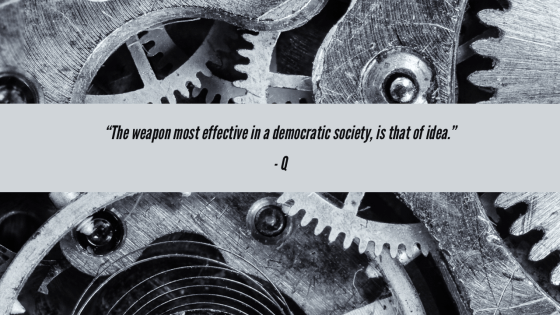
The design of racism and its effects are ideological. It begins in the form of idea, before it festers and works its way into culture, and then manifests into mental illusions, stereotypes and prejudices that the masses come to affirm as facts. The weapon most effective in a democratic society is that of idea. Once the people can be made to believe customized ideas, then laws customized to serve agendas outside of public interest can be easily accepted… leading to a social system that makes a single race out to be villains. Villains who should be kept down thus they rise up to enact some form of violent justice… politicians scapegoating on the backs of an ostracized and victimized people, all the while diverting attention away from political failure and corruption… sound familiar? It’s textbook Hitler.

Not only has the plague of racism infected the minds of the common American, regardless of race, those prejudices gave life to legalisation that created way for mass ghettos largely populated by black people, writhed with violence and poverty. It also gave way for laws that allowed mass incarceration and its great racial disparities facilitated by our American justice system. Even laws for gerrymandering and districting to render black voting less effective and obscure the practice of scholastic segregation.

Sure, many of us have heard of Willie Lynch (or maybe should educate ourselves on the subject) and his divisive philosophy designed to control black slave, but who could of thought that that same system and philosophy could be modified to control American citizens. The methods of divide, fear monger, and conquer… these are the foundations by which we allow our government to ensure that a great deal of young black lives are born and may very well die in specially designed situations manipulated generations (and may sustain for generations more), because of a hatred based on a fear they had no hand in creating…

Yes, the seams of the white supremacist power structure has been identified and called out, but if us as a people do not know where to look for sustaining, meaningful change, then what use is a strike… look into the system. Even though many of us did not experience Jim Crow directly, the aftereffects of its era still haunt our lives with racist laws that have a more subtle tone, are a little more hidden… activated by fear and racist undertones that still serve today to accomplish the mission of great racists, dead and gone… whose hate lingers on, hurting and killing innocents by the hundreds… and sabotaging children’s lives before they even get a chance to live them…

I encourage you to continue to fight, but know what you are fighting for. Want life. Want the right to live. Life for your children, life for your family, life for your human brothers and sisters… and know where to look to get it…

Knowledge is power. Power to change, power to grow, power to rise above…

All power to the struggle…

– Q. Patterson, Creator of BrillianceBehindBars

Prompt: Justice for All? Overcoming Racism in America

From day one, American children are unassumingly taught of a set of illusionary lines concerning race… lines that marked boundaries, established sides, and created imaginary boxes that have kept a great disparagement present between races in America, possible.

The American heritage can be accurately described as one giant story of racial volatility. Its origins are steeped in a history of industrial slavery, initiating racial proclivities sustaining major gaps between the black and white conscious in America since the emancipation of slaves. All the psychological devices used to engineer more complaint products in the slave trade, and ensure that the markets could be ripe with white consumers who actually WANTED to own other human beings, had some serious after-effects. Effects that have prompted a set of unspoken laws and rules that serve to preserve the series of debaucheries that created America and its debased heritage of racial inequality…

No present day American is totally free from the effects fore mentioned. The propagation of racial class and the absurd idea of an inferior or superior race forms the basis of what the present black-white social interaction is in our counter. The concepts of white privilege and black anger show the deep contrast of the American experience. The practice of widely accepted, government sponsored denigration of humans into property, is our history. Black leaders only sought out the complicated task of reconstructing the identity of an enslaved, newly-freed, newly- formed people, Black Americans. The first bit of culture Black Americans assumed for themselves was met with public skepticism and political fear-mongering. The majority and mainstream America instantly demonized it and branded the concept of “being Black” as a lunatic fringe, subversive counterculture. “Being Black,” they labeled as “aggressive” and “anarchist.” Black people were displeased and here to overthrow the government. “They’re angry, they’re loud, you should fear them…”

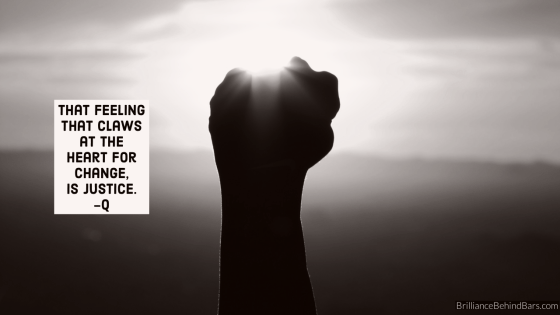
Time has exposed the truth and brought their devices to heel. The modern-mind of our nation now has experienced the advent of social media in the age of information, a Renaissance in thought on American society and race relations. Now, what do we do with it? We COULD say the atrocities committed against black people were done in the ignorance that befell a still growing America… sure, that COULD be said… but that’s for those who truly believe in the strength of human decency and the belief that love can and will transcend us all into a greater society. Still, for those select few, there is the essential task of activism – manifesting beliefs into the material world by means of work… regardless of color, right is right. That feeling that claws at the heart for change, is justice. It is real and it is one. It is the key to the next step in us all making America ‘greater than it’s ever been.’

Educate the mind, keep up the body, free the soul. All power to the brothers and sisters of the struggle… We are one nation. INDIVISIBLE, with JUSTICE FOR ALL…

Prompt: Write an essay, make art, or write a poem answering the following:

What is your experience with racism? Can it be conquered or overcome? Do you have ideas how to do it?

With the special session coming up, they say there’s a chance for change within the system. Do you see that helping or hurting chances at overcoming racism and achieving justice?

-Q. Patterson

The Blind Indifference

Racism… I wasn’t brought up deliberately to hate another race of people. Sure my grandmother had a lot of animosity directed to the race of people who aimed water hoses and sicked attack dogs on her purely because she recognized and fought for her identity as nothing less than a human being, but she didn’t propagate such lessons of hate.

My mother came up in a time (mid 70s-80s) where the blatancy of racism was considered taboo and uncool, so racism took a more subtle approach and found less need to make spectacles because the concept of racism was inculcated deep into the social system. It suffused its ethereal existence in prejudice and stereotypes that painted one race superior to another. This form of idealism sunk into the minds of pro-Jim Crow generations and served to maintain the grip of white superiority in the battlefield of the mind on a level subconscious and virtually invisible to the masses of Americans.

By my generation’s coming, racism was still projected in its most overt form, as an egregious, flagrant prejudice where most Americans – black, white, and other – would not believe that it existed beyond alt right racist organizations such as the KKK and neo Nazis, but such was its greatest achievement. Just as the old saying goes, racism’s (like the devil) greatest trick was to make people believe it did not exist.

It took more for me than most to believe that racism was prominent amongst Americans. Most unknowingly partaking in the vile and divisive culture of racism. Myself, in my ignorance, included. But now, the Age of Information has dawned, shining a light so bright that the dark subversive culture of racism can no longer leech off the mind of the Free People. People who are now armed with a knowledge and a weapon undefeatable in a war where fear stoking and ignorance is the primary strategy of its enemy. This weapon is Truth.

The only way to ensure that we, Free People, continue to press the enemy back in our unending fight for the America’s soul is to continue to have the ugly conversations. To continue to sound the horn on watch against threats standing in oppostion to the ideal of equality. Continue to believe in the cause and its eminent ascension…

Know that the struggle for equality, in its truest form, is unceasing.

In this struggle, vigilance is key. Vigilance is mindful awareness.

In this struggle, vigilance allows no enemy to gain ground.

In this struggle, ignorance is blindness…

In this struggle, blindness to a very real enemy is lethal.

– Q, June 2020

Reflecting on Juneteenth

In response to the cries of their citizens for racial justice, Virginia has proposed that the tradition of Juneteenth, commemorating the emancipation of Black Americans from slavery, should be recognized as a state holiday. The governor of Virginia, Dr. Ralph Northam brought on Virginia Beach native, Pharrell Williams to help introduce the proposal. Ironically, the idea is for the holiday to be a paid vacation day…

Gathering a consensus, many do not trust this proposal, seeing it as pandering to blacks as a means to calm protest. Others see it as a significant symbol in the struggle for change. I, myself take a more centered point of view…

The removal of confederate monuments, symbols of America’s less than perfect past and the implementation of holidays such as Juneteenth, to honor a very important step in the future of a more perfect union – and in what was the capital of the Confederacy leading the way! Is this not a message that the country is finally hearing its peoples calls for change? Could be…

I asked an older black man for his take on it. He had some advice that I believe is important for younger generations who are desperately seeking change… He said that they should not be satisfied with mere peace treaties. He has seen throughout generations where his people accept concessions and ease their stances. He urged they should not stop their protest until they KNOW (not assume), that a suitable standard for cultivating true social/economical equality is achieved. They should understand and have intelligible demands. To me, he was saying only they, the people, have the power to make sure that Juneteenth is not just degraded into another political maneuver and a very cruel reminder of a government’s deliberate attempts to hold back a people based on their racial identity. Instead, they should make sure it actually marks a turning in the culture of how America treats race…

All in all, I admire Virginia’s proposal to make Juneteenth a state holiday. I believe it to be a courageous move. It sets a standard for our nation. It also shows the consciousness and transformative power of a state that’s willing to not only recognize its fault, but stands to correct them.

I am a Virginia native, and I’m proud to see the present mind of Virginia overcoming its leading role in the history of American slavery. Hopefully, our nation as a whole can emulate this mindset, and take diligent steps to correct the great wrongs made in its less-than-perfect past.

I do believe in the ideal America. I believe that all of its principles are achievable, and I will fight constantly to ensure that I do everything I can to realize those truths.

Happy Juneteenth to all.

Q, 6/19/20


undefined

Fear: Writing Prompt

The year of 2020 was anticipated with promise of change. Many of us prisoners here in Virginia were looking towards possibility of some relief, but as quickly as that light came, brilliant and burning with hope, the quicker that flame was doused and the gloom of despair and uncertainty reclaimed the reigns of our community. This time, the darkness came in a form fit for global impact – a pandemic. pestilence. 2020: affectionately dubbed the year of clarity and vision by most of us, has quickly wrapped into 2020: the year of the coronavirus.

Incarcerated populations across America have been affected by the disease at various rates. On the low end, staff’s refusal to work in possibly infected areas is slowing operations. At the high end, the highly communicable virus rapidly spreading throughout the confined quarters of prison communities, where social distancing is literally impossible.

So far, there is no apparent sign that the virus is here at Lawrenceville, but the proliferation of COVID-19 across cable television, the woes of our family members by phone, the statewide directives locking down prisons, and distributing sneeze guards keep fears fluid and real from one side of the gates to another.

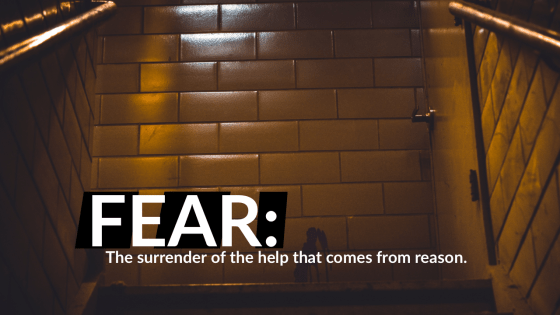
Fear: the surrender of the help that comes from reason.

Behind the walls, fear is king. As incarcerated people, we deal with a set of fears most others do not. We depend on staff for almost every necessity. If conditions became somewhat apocalyptic and society destabilizes, prisoners will either be legally executed or abandoned in cells to futilely fend for themselves… a fear permanently etched in the back of the mind, and at the center is the motivation for all fear — the idea of survival.

Prompt: Define fear in your words. What are some of your fears? How do you see yourself overcoming them? What do you think could be done to alleviate today’s fears of sickness and death?

– Quadaire Patterson, Creator, Organizer, Writer VADOC #1392272

Editor’s Note: If you or someone you know wants to write on this prompt this month and be featured on BrillianceBehindBars.com, send an email to yourlovedoneq@gmail.com with the essay and bio to review, or we can add inmate numbers to our Brilliance Behind Bars JPay to allow them to contact us directly.

‘What’s Free?’ Introduction

In the state of Virginia this year, there was a justice reform bill that drew the attention of every eye within the incarcerated community (this community includes family members of incarcerated people.)

HB 1532 was a bill that was set to change the world of Virginia men and women circulating the VADOC system. The bill was set to upgrade an already in-use system of earning “good time,” which in its current state allows inmates with a flawless conduct record to earn up to 15% off of their sentence. For example, an inmate can be given a sentence of 20 years. If they remain flawless in conduct for an entire 17 years, they would find themselves released. No real incentive placed on unrealistic standards – disparaging and illusionary. Under the introduced bill, if an inmate maintained flawless conduct (and mind you, this is no easy task by far), they would receive up to 50% (give or take 5 years) of their time reduced. Hence, tangible incentives to encourage good behavior and rehabilitation… giving some realism to the standard put forth…

The bill eventually – after several committees mulled over it – applied amendments relegating its effectiveness to non-violent offenders (which make up a very small portion of the ones who need it), and pushed its date of effectiveness back to 2021. The patron, Delegate Scott, elected out of Portsmouth, has opted to push the bill in hopes of finalizing a more inclusive clause…

I had predicted for a time before the conclusion of Virginia’s 2020 election season, that the House wouldn’t just ‘flip the jailhouse over’ and empty convicted criminals into the streets. Irresponsible, along side political suicide. I know in these confusing times, it’s unclear whether they go hand and hand anymore.

The idea of being released early was met by the majority of my community with joy. I did not share in the same elations as my community members. I took in that idea with much needed perspective. Knowing that since I came into the final stretch of my sentence, it’s all been about planning. Planning not only to be released – no, that’s not even a fraction of the struggle for me or most in here – and not only to survive; but to thrive in a world that’s unfamiliar. The thought of early release becomes synonymous with thoughts of being unprepared… and the question… what is free?

I started with the definition of release – to be free from restraint, confinement, or servitude…

How many of us questioned freedom outside of being physically imprisoned? A lot of the thinkers inside have attacked the concept of freedom philosophical. But I don’t believe the core of freedom resides solely at the footstep of the mental. I warn against my fellow incarcerated people to disregard what we have already blatantly ignored. The station of the law fails to return a standard form of freedom to those who have been convicted of a crime, resulting in a virtual life sentence.

‘Ex-felons’ are subject to restrictions that accompany them long after their prescribed sentence. nullifying a lot of any possible knowledge they may have acquired over their decade long stints. For example, many of us incarcerated were oblivious to legal process, being that a lot of us didn’t make it to government courses. Nor were many of us properly introduced to ideas or proper outlets to help us define ourselves to ourselves, outside of the deplorable environments which we were raised and ventured.

I plan to help change that by bringing awareness to the political obstacles that impede an incarcerated person reacclimating into society.

Together, we can help better restore the standard of freedom amongst ALL members of society…

– Quadaire Patterson, VADOC #1392272, From Virginia Beach, VA

Editor’s Note: In March, we will be approaching the topic of freedom, amongst those imprisoned. For more, visit: ‘What’s Free?’ To read the prompt shared with those who are writing, check out this post. Thank you as always, for your support.