Blog Feed

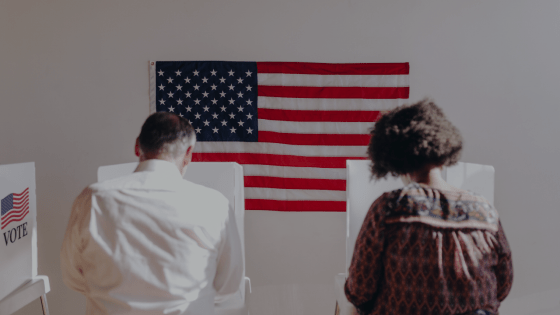
What’s Free 2023!? – Voting.

Editor’s Note: What’s Free is a column that began in 2020, that asks the incarcerated community what freedom means to them. Inspired by the movement of enhanced earned sentence credits, we have raised the topic every year to keep the momentum alive as more brothers and sisters remain behind bars in the Virginia prison system. This year, Q has decided to talk about the freedom that comes with participating in our political system.

Virginia criminal justice reform has been shifting back in forth between a full, most needed overhaul and virtual crumbs to keep the majority of our loved ones seeking more from our state leaders. This year though, one hundred seats in the Virginia House of Representatives are up for reelection. This is where the power of the vote will have its greatest chance to reflect the voices of the incarcerated in the form of our loved ones active participation in the voting process.

When it comes to voting and change as a whole, all of us who have been dejected by the losses we’ve taken must be wary of a most destructive attitude – political skepticism – which only serves to keep the chains on the mind, soul, and in our case, the body.

It’s no secret: every stride gained in regards to who gets to vote in America, has come by way of combat. Normally, this form of combat has placed minorities in position of a proverbial David versus the very real Goliath of bigotry and racism. Continuous combat of this nature will leave a sense of dread and despair no matter how many times we have overcome…

For example, for the last 10 years, Virginia governors fought to ease the path to Restoration of ex-felons rights. In a single term, Glenn Youngkin secretly rolled back automatic expungement without ever addressing the public about the change. But why? What does Glenn Youngkin have to fear from a fuller version of the right to vote? He has to fear YOU!

Political skepticism is the biggest threat to change. Feeling like your vote doesn’t matter, your voice won’t change anything, that the vote is ‘rigged,’ are all thoughts that trap you in a form of political slavery where you willingly give up your fate to the hands of those who’ve already condemned you.

We’ve already heard the stories about how vicious southerners became when former slaves were granted the right to vote. Through those acts of brutality and intimidation, we can surmise how important and powerful the vote is in this country. Even in modern day – look at how Donald Trump played with the idea of the vote being rigged to charge up his base and turned them on the capitol.

Minorities often complain about how politicians are constantly pandering them – encouraging them to get out and vote for them – yet minorities are still skeptical about whether their vote even matters. The fact is that Democrats need a large portion of the minority vote to win the presidential office in any given year.

Let’s look at it this way: if the vote is real (which I most certainly believe it is), then not going out to vote has very real life-costing consequences. The greatest threat that must be overcome is the captive thinking of political skepticism.

What’s Free!? Freedom in this country looks like every single American voting in EVERY election – whether they’re an ex-felon, incarcerated, or free.

-Q

Prompt Questions (Thought Starters for the Incarcerated Population):

  • Can you identify examples of political skepticism in your every day life? Does it affect you? Why or why not?
  • How do you feel about the recent changes Govorner Youngkin made to the restoration of rights?
  • Being ineligible to vote yourself, how do you plan to be involved in the upcoming state elections for the Virginia General Assembly members?
  • How do you think that society can benefit from every American being able to vote?

“The Capitol is Being Stormed!” -Q.Patterson

Brilliance’s annual ode to black history has me checking the archives again for a bit of Hov. We are two years post wake of the January 6th Riot, and Jay Z’s take on the event still strikes every part of me that remains utterly disgusted with what took place that day…

“You let these crack-ahs storm ya capitol and put they feet up on ya desk/ and you talking tough to me? I lost all my lil respect.”- Jay-Z

“What It Feels Like” is the title of the track Jay featured on with the late great Nipsey Hussle. Here is where Jay felt the need to address the government and there handling of the January 6th riot compared to how the country continues to treat its black citizens with blatant injustice, violence, and death.

Some could easily take this statement as anti-government, but I see it as a patriot’s expression of great disappointment in it’s country. Most of America and the rest of the world witnessed America under siege.

Most cannot disregard, though they won’t to be forthcoming enough to admit it, the reality that if the insurrectionists had been predominantly of another race, the classification of a riot would have had to take a backseat to what would have been a race massacre… Now the problem isn’t with the potential of a massacre actually happening, but the fact that race holds such a stranglehold on our country’s mind. Race holds such a stranglehold on the minds of Black Americans.

As a Black American Man, I feel as if I could see it unfolding right before my eyes– minorities being violently subdued and put to death on the spot for having the sheer audacity to storm the capitol of the united states. Heinous, but sadly, it is something black people actually fear would have happened.

Jay-Z raises a voice in defiance of such fears, while pointing out the unfair treatment that continues to eat away at the integrity of this country. Jay uses his immense platform to rally the Black populace to demand the respect of its government.

I, for one, feel that Black Americans do not do enough to hold the government accountable. Jay looks to lead that way for others who may feel a little dejected by January 6th, but he doesn’t invoke despair or an increased awareness of white supremacy. He ask for anger and assertiveness. He wants Black Americans to know that they are worthy of just as much respect as any other race in America…

I agree.

-Q. Patterson

A Breeding Ground for Sociopaths?

One of the more interesting – and disturbing – correlations I’ve found in my seven years of incarceration is the relationship between the length of stay one endures in prison, and their tendency to display and employ sociopathic, harmfully-manipulative behavior. Naturally, one must ask: post hoc, ergo propter hoc – does one thing actually proceed from the other? Or is this merely bias-infected coincidence? To be fair to logic, I must preempt my argument with that caveat.

I tend to see prison as an incubator of anti-social behavior. This, in my experience, is one of the fundamental flaws of the “system.” One may enter this environment, after truly making a bad decision, as an otherwise upright, moral and ethical person, complete with the normal range of empathetic regard for other people. But after years and years of grinding it out in such a hostile, negative environment, rife with personalities who are and have always been truly predatory, these normal, good people can adopt antisocial, manipulative behavior pattern as means to survive. And, after years of stewing in this muck, the system chucks them back out into polite society, declaring them rehabilitated, when in reality, they are anything but. They now have a whole new set of skills, skills which are detrimental to society.

This is a systemic failure.

Prison resembles a bit of a command-type economy: resources are doled out by the administrators, and there are zero ownership rights to anything, even the property you buy; in an instant, anything you “own” can be seized by the state, under any pretext. This isn’t a conducive environment, on economic grounds, for social harmony, to say nothing of viewing it through the other human sciences.

There are many people in a housing unit, but limited phones, limited kiosks (an email-esque service), limited ways to stay connected to the outside world. Likewise, there is limited sustenance, as well as limited means to make a “living,” as if slave wages can be considered as such. From a Maslowian perspective, prisoners are kept far, far away from the pinnacle of the human experience: self-actualization. And if Maslow is even half right – which some would regard him to be – humans will do what they must to claw their way up his pyramid.

So people adapt. And after years of fighting for the most basic of necessities, they maladapt. Can anyone really blame them?

In my life, I’m exposed to two extremes of prisoner: very short timers and very long timers. By and far, it is the very long timers who exhibit the most dangerous, zero-sum, manipulative behavior. They are, as the colloquialism would have them, thoroughly institutionalized. And there are those too who straddle these extremes, men with practical life sentences, which they are now just beginning to serve. Interestingly, it is they who help bolster my argument, as, over time, their reality sets in, and they begin to display new, antisocial behaviors; they are the transition cases that supports my hypothesis.

And I have trouble finding fault with most of these men. Truly, even I, a person who consciously, obsessively attempts to jettison his innate, and overwhelmingly normal, ego- and sociocentric tendencies, with a rudimentary understanding of metacognition, has to diligently guard against falling for the allure of an easier life by manipulating those around me, because the temptation is there. How could it not be?

So I put myself in the shoes of other people, more than I did as a free man, knowing well the temptation not to. Sometimes that’s bewildering and painful. Even just yesterday, I had a difficult conversation with a man who has done a tremendous amount of time. Respecting his privacy, I’ll call him Charles.

Charles isn’t a horrible guy, despite making a horrible decision all those years ago. Yet after so many years, his ethical framework has morphed into something totally self-serving and delusional.

Like so many contentious interactions in prison, this one revolved around a phone. Apparently I had vexed this man in my attempt to use a phone earlier than I had intended, which I actually did to conform to his need to use it at a particular time. Intentionally seeking to avoid conflict, I was confronted with it anyway. And afterwords, I was gaslighted to be made to feel that, notwithstanding my attempt to avoid conflict, I’d caused it anyway. The whole episode was bewildering; but, during it all, I couldn’t help but feel sorry for this man. He was truly just trying to look out for his own self-interest, not only in using the scarce resource of a phone, but also in trying maintain the even scarcer resource of his dignity. He’s simply a product of his environment. And had literally no idea he was acting in an antisocial manner. Total solipsism, totally unintentional.

Paradoxically, the society thought he needed 30-plus years to rehabilitate himself. And it hasn’t turned out so well, which I have a hard time faulting him for. This environment reinforces behavior like Charles exhibits. And the extra time he’s served hasn’t helped in that regard. It seems to have hurt.

This is the fault of the system, because the system, despite its Orwellian insistence otherwise, does very little to actually rehabilitate. Structurally, it can’t. It is designed on the assumption of low taxpayer cost, resource-starved to its core, totally isolated from the democratic process. Modern prison is nothing more than a warehouse, full of men and women waiting to be pulled off the shelf, when their number pops up, and shuffled out the door, “rehabilitated.”

In the interim, the longer they are here, the higher the chance of maladaptive behavior patterns forming, the higher the chance of institutionalization. What good, precisely, does this do them. And more importantly, what good does it do society?

Correlation isn’t causation. This is all anecdotal. Yet I see a trend, nevertheless.

Christopher Read
#1770228
Haynesville Correctional Center
Haynesville, VA

The Loudest Voice is Our Vote

While sitting in the Birmingham jail, Dr. Martin Luther King Jr. wrote in longhand his famous “Letter from Birmingham Jail.” Within this letter, he stated how he couldn’t sit idly by in Atlanta, his home state, and not be concerned about what was happening in Birmingham. Whatever affects one directly, affects all indirectly.

In my 23 years of incarceration, I live with the direct result of an injustices I created. This injustice is now effecting me and many others and that injustice is: “NOT VOTING.”

In November of 1994, my late father-in-law warned me of not voting. It was during this time that Mr. George Allen was campaigning for governor. His campaign was fueled by the ‘tough on crime’ mantra, with the abolishing of parole as the prize for electing him as governor. I never paid much attention. And to be honest I really didn’t care. Never in a million years did I think that abolishing parole would become like a modern day genocide.

I know that crime must be dealt with, and we all want a safe society. However, many make mistakes, are remorseful and seek rehabilitation to become a better person.

Now in 2023, I find myself facing a very lengthy prison sentence, without the possibility of parole. During these past 20 years, I have met many individuals, some guilty, and a few not guilty. I’ve also met many who, through the rehabilitative process are better and different people today. But the majority of us continue to find ourselves at the mercy of the governor to one day enjoy the freedom that we took for granted and forfeited.

I didn’t vote in 1994, the following year (1995), he fulfilled his promise and abolished parole in Virginia. I’m living in the results of not voting. Many think that my one vote doesn’t matter, just think in a small town, someone won a school board seat winning 3 to 2. Voting matters from our local elections to the highest elections. Voting is actually your voice!!

I lost my right to vote; now, I try to inspire others to vote. I speak to inmates often telling them to encourage their family to vote. Yes, we’ve lost our rights to vote. But think if each of the 37,000 plus inmates in Virginia would inspire 10 people to vote, that would be would be 370,000 votes cast. Yes, it would be in different districts, but I promise you this would make a difference.

So inspire your family and friends to vote. When they ask if they can help, say yes, Vote!! Also tell them to get in touch with their elected officials, from their local representative (senate and delegate) to your national (senate and delegate) prior to elections. If these elected officials will not return your email, letter, or call, then thats a blatant example of them not EARNING your vote.

It’s time that they realize that our votes must not be taken for granted but must be earned.
Let them know what issues effect you and your community. These elected officials are there because of you and for you.

It’s time that we stop being “Democrats, Independent or Republican.” We are humans with a voice, and the loudest voice is our VOTE. It’s time that they stop taking us for granted. Many have gone before us before us, oftentimes being jailed and treated harshly for wanting to vote. We no longer have to count the “jelly beans” in jar. We just have to register. Pass on the importance of voting on to your kids.

To my fellow ex offenders, vote for us! Make getting your rights restored a priority. Speak out for change.
Its time that we stop giving away what many others earned through their blood, sweat, tears and some death.

Many died for us to have the right to vote, don’t give it away, because this injustice is a threat to justice everywhere.

Samuel E Harris #1026738
Lawrenceville Correctional Center

Suffolk, Virginia

(Sam) a successful car salesman in the Tidewater Area who suffered an accident while in service to his country and later diagnosed with PTSD by the Department of Veterans Affairs, but later denied treatment due to bureaucratic red-tape, caused him to self-medicate and lead to his incarceration for robbery with a 220 year sentence, with 60 to serve. In spite of his situation of incarceration, he has used the last 23 years to rehabilitate and become the devout man of God he is, that has served others through the positions and platforms he’s held within prison. He’s also co-authored several books :”Beyond The Shackles” and ” Speaking Out for Change” as well as authoring his own book ” A Double Minded Man” soon to be released. He can be contacted via US mail or email @ JPay.com Samuel E Harris #1026738

It Would Forever Unfit Him To Be a Slave

“….A nigger should know nothing but to obey his master – to do as he is told. Learning would spoil the best nigger in the world. Now,” he said, “if you teach that nigger (speaking of myself) how to read, there would be no keeping him. It would forever unfit him to be a slave. He would at once become unmanageable, and of no value to his master. As to himself, it could do him no good, but a great deal of harm. It would make him discontent and unhappy.” – (The Narrative of the Life of Frederick Douglas)

Within the above quote, Frederick Douglas recounts the moment his slave master admonished his wife for teaching him (Frederick Douglas) the alphabet. According to Frederick Douglas, his enslaver was fearful that an education would make him unfit to be a slave. After witnessing this exchange Douglas was certain that the words his master spoke were true. He now understood that Whites greatest power over Blacks was their ability to keep them blinded through their ignorance. From this moment on, Douglas became obsessed with learning to read and write. But since his mistress now forbade him to learn, Douglas had to devise clever ways to get around the social barriers that made it unlawful for him to learn.

This quote is relevant today, because we now live in an era where the White power structure once again has erected new barriers that prohibit Black children from learning. Groups like Moms For Liberty have lobbied for, and Republican leaders like Florida’s Governor Desantis, have passed laws outlawing Critical Race Theory and banning books by Black authors that address race issues in America. The deprivation of a quality education for Black children remains a prominent agenda of White supremacy in America.

If Blacks living in America today hope to overcome the education barriers of our era, then we must adopt the resolve of Frederick Douglas. We must adopt the mentality that any where we are at can be transformed into a classroom and we must use every conceivable opportunity and resource at our disposal to educate ourselves and our children. As a race, we cannot allow our ability to learn to be limited by our group’s inability to receive a quality education inside of the White power structures public schoolhouse.

I once heard a story about this ancient philosopher. It is said one day one of his students came to him requesting additional education. The philosopher looked as his pupil and said, “You want to know what else I have to teach you?” The pupil replied, “Yes!” The philosopher told his pupil, “Follow me.” The two men walked to the coastline and the philosopher enter the water where it was waste deep and gestured for his pupil to follow. When they both were submerged waste deep in the water the philosopher said, “Now I will show you what else I have to teach you.” The philosopher grabs his pupil’s head and pushes it down into the water. The two struggle as the philosopher continues to hold the pupil’s head beneath the water. Finally, the philosopher relents and the pupil comes up from the water gasping for breath. The philosopher looks at him and says, “This is what I have to teach you. You should want knowledge the same way you wanted air.”

Ensuring that Black children in America are receiving a quality education is something that we have taken for granted. But when we are deprived of it, or it under threat to be taken away. We quickly realize just how important it is to our overall survival as a race of people. This should naturally produce resistance within us and create a power struggle where we fight now begin the fight for power, we now understand why it important for us alone to control our own education the same way the drowning man understands why he needs to fight for control over his right to breathe independently.

Lord Serious Hakim Allah
#1404741

Lord Serious is an author, artist, activist, blogger, and representative of the Nation of Gods and Earths and the Director of Umoja Nation. His latest children book “Squirrels, Beavers, And Everyone Else” is scheduled to be released in March as an eBook on LuLu, Amazon, Barnes & Noble and most major distributors where ebooks are sold. Work Release (The Mixtape), Vol. 1 is available on his social media pages @ Lord Serious Speaks. Lord Serious is the co-author of the “10 TOES DOWN” drug rehabilitation program and interactive facilitator of this program and the “My Next Step” program at Lawrenceville Correctional Center.

Many Small Particles

First of all thank you guys for giving my thoughts a voice box!! All too often, thoughts and ideas, dreams, and/or aspirations are severed due to the inability of us with them to have an outlet or audience to express them to!!! So thank you!!!

My quote has a small background in that I’ve currently been incarcerated for 27 years straight and counting!! And in 2000, while in longterm segregation at Red Onion State Prison of which I did 3 years 10 months and 17 days straight of “HOLE” time, I was studying Marcus Garvey, (my personal idol) and in his book he said: “We are but small particles, and it takes many small particles to make up a unit, and many more units to make up a WHOLE!!!”

Meaning, we are but parts and pieces that has to be brought together to make up a whole, and even when brought together, we still have to be adhesive enough to actually grow and bond in order for it/us to work!!! We as a people always find ourselves looking at what we don’t have in common and how different we are and we use that as our guides to discredit or to reject others instead of focusing in on what we want to achieve and how our different ideas and methods or approaches can be of a greater benefit!!! We all too often say the same thing but say it different!!! We can be so much more powerful, we can be so much more effective if we allow our differences to be the magnetic force that pulls us together, instead of being the thing that drives us apart!!!

The American Mafia did more with less! They made billions of dollars with far less people, than say for instance these modern day gangs whose numbers are in the 100,000 whilst collectively they don’t have a million dollars!!! The economic freedoms and opportunities that are ever present today literally have paved roads to success should we take the proper steps!!! But with ignorance, unbalanced preconceived notions we trip ourselves up and those that can or are in a position to help aren’t even given a chance when we snatch the rug from under foot “just because” all too often, we let what separates us guide us and when wonder why we can’t progress!!! We are all survivalists, but we can stand a better chance to NOT only survive but succeed in any endeavor should we look to each other and look at each other as supports rather than adversarial pieces that hinder us.

We can be as different as we naturally are but have the same common goals, objectives, methods, etc… without ever having to sacrifice who and what we are! People with shared ideas/dreams have a higher probability to succeed working with others rather than going at it alone!! Fighting for freedom which a lot of guys imprisoned typically do realize pretty quickly that outside of placing oneself in the vicinity of a crime that fighting for freedom with poor representation does NOT hold well!!! So why do we represent ourselves so poorly????

We sit back and allow others (strangers even) to represent US based off of whatever information/lies/disillusionment that we feed them instead of caring enough to educate ourselves to a point where we stand up and fight for ourselves!!! Every day we wake up to is another unique opportunity to do better than the day before, it can be a day to learn more than the day before, but more than anything everyday we wake up we should always challenge ourselves to do more than the day before!!!!

Most people find weakness in working together, or feel weakened by it!!! It sounds crazy but its the raw truth!!!! When I read the quote from Marcus Garvey, I realized that alone I am small and almost insignificant, but put with the rest of Hashems’ (God’s) creation I become significant and relevant which carries over to those around me and to those who share in my plight, to those who share in my pain,I implore you to now share in my effort!!!

Abraham didn’t know that through His progression that He would advance from Abram and Moses asked God, “Why me for I am slow of speech?” Hashem (God) said, “Go!!! I will be your words!!” We are living in our predestined paths all of which God has chosen specifically for us!!! But we must know that the world spins whether we witness it or not and its our egos and self doubt that holds us back and our circumstances derive from OUR thoughts!!!

In order to rise, we must stand!!! Alone we are small and together we are strong it takes us all and if my insecurities make it hard for me to stand up, will you please give me a hand or boost????!!! Your helping hand and your time and your ears are what gives me the confidence to face myself and the inner changes that I need to make to rise above my past and current circumstances to be lifted to a higher place and peace of mind!!!! Let the God in me commune with the God in you!!! That simple truth can break down so many barriers, walls, prejudices, etc!!!

It takes many units to make up a whole, which means it takes us all!

Yours Truly,
Andrew Suspense, B.K.A. Droopy
#1127539
Lawrenceville Correctional Center

Black America Inside Out ’23

Words from Q:
It has been 3 years since the team at BrillianceBehindBars.com set out to show the world that there are living, breathing, intelligent men and women incarcerated and worthy of a voice.

In this short time, Brilliance has gained a multitude of incarcerated contributors spanning several prisons and correctional centers across Virginia. Brilliance has continued to provide a unique platform for incarcerated voices to sound off on current events affecting their lives and the lives of their families. We have even gained the attention of several Virginia state legislators! To top it all off, a group of our contributors have been actually able to meet with state officials!

Brilliance continues to build with the hearts and minds of the incarcerated at its center. We are being noticed. We are being heard. We are here because of all the work of our team and incarcerated contributors. I’m proud of what our community has been able to accomplish, but the struggle never stops, so neither can we. Let’s keep it going!

Please continue to encourage your loved ones to get active and support the efforts of our freedom fighters who keep our voices and faces front and center of the media, the public, and VA lawmakers. They ensure that we are not forgotten…

Continue to spread the love for your fellow incarcerated. None of us want to be here, but since we have to, let’s be creative, constructive, and uplifting. Do the time, don’t let the time do you.

I have great love for all of you and your families.

Love, Light, and Godspeed,
Q.


BlackAmericaInsideOut ’23 Assignment – 3rd Year

Participants are asked to take a quote from a prominent Black American figure, past or present, and write a short essay, compose a poem, or any type of written creative work explaining what that quote means to you and its relevance to our current situation in this country…

Remember: Add your name, number, and where you are from. People may see your submissions, so let em’ know who you are.

Less Than 100 Years from a Desegregated America

by Andrew Suspense


Do I believe it is possible to overcome hundreds of years of slave trade mentality in America in our lifetime?

Obviously, NO!!! Whilst being objective! The Slave Trade mentality took a few cruel ideas that turned in 100’s of years and generations to first build, then to maintain such harsh judgements, treatment, and to reclassify a people because of the color of their skin – that is not unprecedented. But the systematic way that it grew and kept strong is unprecedented, largely because it still exists today! However, most laws as they are written to date are on the one hand antiqued… they were written to White America because when the laws were put on the books, America was still segregated and basic color segregation kept crimes and criminals to pockets of areas which also largely speaking crimes weren’t committed as freely and as prevalent as they are now! The systematic, and subliminal indoctrination of racism that maintained for hundreds of years, won’t be eradicated in a few decades when racism has now evolved and isn’t expressed as openly and as commonly as it once was. We aren’t even 100 years removed from a desegregated America!!!

As far as crimes being addressed — The most severely and most commonly committed crime in Virginia is robbery! Which is the one crime that has the highest conviction rate of any crime. It’s also committed mostly by minorities, and it is sentenced more harshly than any other!!! Here is a hard fact and I DON’T make mention of it as a way to demean or to mean that one crime is better or worse than the other, but the fact that it holds true is worth speaking on! If a guy raped a woman at knife or gun point, he will get less time than if he took a purse or wallet from the same woman at knife or gunpoint. So her being victimized on the severity scale her purse holds more value than her body/womanhood!!!
And the repeat offenders who victimize women are said that they are sick and need help!!! But the guy who took her money or watch is a hardened criminal who needs to be taken out of society for decades, with no help or rehabilitation. No educational opportunities to have a chance at a job or having skill sets to help ensure ones chances at being a productive citizen! And there could be 100 robberies and all 100 of them are committed 100% different, but no matter the crime Virginia doesn’t allow judges to sentence each according to each set of facts! Not to mention the representation that all too often falls below an adequate level!

“The prison system can be used/utilized by creating things like,” Convicted Leadership Academy’s!!! ” Prison is devoid of so many USEFUL things, whist spilling over in abundance with ignorance and stagnation!
But when we convicted felons step up and grab some of our at risk youth, then we, in that failure to act ,are responsible for forfeited futures! Our painful experiences need to be fuel or boost we need to get up and over our self created walls of doubt, and be the courage to step into a better me. WE have to talk to, we have to guide, we have to beg our youths, we have to yell at and out to OUR youths. Prisoners can talk to those who are seemingly headed to. We are the instruments and vehicles for rehabilitation for OUR youths!

It would be something like the girls and boys club but strictly with convicted felons mainly those currently serving.
Mass incarceration isn’t necessarily racially motivated, simply because America was still segregated which would have had tremendous impacts on volumes of crimes and geographically, so the penal statutes weren’t cratered to minorities even though it seems as if it was and is!? Oddly enough. But enough about what isn’t, or what we don’t have. Let’s just be the change and get it done, by getting it or any other idea going!

Andrew Suspense
Lawrenceville Correctional Center

What’s a Pound of Human Worth?

By Christopher Smith Read

The institution of slavery is still alive and well in these United States. For authority, I cite the U.S. Constitution, Amendment XIII: “Neither slavery nor involuntary servitude, except as punishment for a crime whereof the party shall have been duly convicted, shall exist within the United States, or any place subject to their jurisdiction.” Readers doubting the actual effect this has on the twenty-first century, consider this: the author, as a person “duly convicted” of a crime, is required to work for the Virginia Department of Corrections, as a condition of his good time earning allowance, and is paid 45 cents per hour. Minimum wage laws do not apply to slaves. If he doesn’t work, then the department, through its own legislatively delegated authority, can make him serve his entire 10 year sentence.

This is the reality for millions of men and women throughout this putatively liberty-loving country; a country which, with proper historical, economic, and political context, has zero choice to be what it is: the world leader for keeping people in bondage. Granted, many countries subject prisoners to far more barbaric forms of imprisonment, but the U.S. nevertheless stands quite alone when it comes to the sheer scale of its operations. And United States’ prisons are barbaric for a far more insidious reason: U.S. prisons impose a strict regimen of pure, profit-driven apathy.

How we got to this point is no mystery. In fact, we’ve been doing things this way for so long that even before 1776, when we declared ourselves independent, the stage was set for today. As I’ll argue, we have no choice in the matter; structurally, the U.S. was destined to commoditize human flesh. And only through wholesale, aggressive federal legislation – or better yet, Constitutional amendment – will this ever change. But this analysis will end with what the author sees as a naively Panglossian prescription, given the alignment of the current interests in this country. That said, as Red, played by Morgan Freeman, concedes over and over again in “Shawshank Redemption” : “Hope is a dangerous thing. Hope can drive a man insane.”

Over three centuries ago, in 1714, a transplant from Rotterdam settled into London and penned this scandalous poem:
“Millions endeavor to supply
Each others Lust and Vanity…
Thus every Part was full of Vice,
Yet the whole Mass a Paradise.”

Bernard de Mandeville (1670-1733), laid down the claim that “private vices are public virtues” in his “Fable of the Bees”, a sentiment not denied by the Father of Capitalism, Adam Smith (1723-1780), but put forth in his “Wealth of Nations”, with far more sensitivity to the era’s puritanical sensibilities than Mandeville could muster. Even still, both men had identified the beating heart of today’s free market, capitalist economies: people responding to incentives, exploiting opportunities with no regard for society’s well-being, and yet through their consumption, benefitting us all nonetheless.

And there is no doubt in anyone’s mind that capitalism generates wealth. Nor is there any real argument to be had that capitalism’s nearest competitors can even contend. They can’t. But, as with all things, there is a tradeoff; or, as economist’s call it, an opportunity cost. For to make a few immensely wealthy, and most historically far more comfortable than their ancestors, millions will find themselves locked in cages for profit. In a cruel twist, then, many victims of their of own vice, no doubt, will be locked away for public benefit – bees who can never come back to the hive.

Economies are circular networks; one person’s spending is another person’s income. Thus pretty much every tax dollar spent on incarceration ends up back into the hands of private enterprise. The concrete and fence contractors providing the means of bondage, the massive food distributors responsible for providing prisoners with the sustenance – just barely; even the army of correctional officers’ paychecks – all of this eventually worms its way back into private hands, private hands which constitute an asset holding class of people, U.S. citizen or not.

The asset holding class – or Marx’s capitalists – generally do not vote against their own interest. And they generally have an outsize influence on politics, being the people most likely to donate to politicians who will vouchsafe their wealth on the floors of this country’s legislative bodies.

And running prisons says nothing of the mega corporations existing in a symbiotic relationship with the state. Keefe Commissary Group, GTL, Bob Barker Corp., Armor Correctional Health, these are just a few named familiar to nearly every modern prisoner. Mega corporations such as these shamelessly gouge prisoners and their families, all with the blessing of the state in which they operate.

Yet, who can really blame the institutions and firms involved? Where’s the incentive not to seek profit from what lawbreakers have done to wrong society? If the state is to tax its citizens for arresting, prosecuting, and punishing those who harm society, then what’s wrong with getting tax payers the most utility for their dollar? In theory, if private enterprise, contracted to do what the state’s duty is, insofar as incarceration is concerned, can offset – or net out – the cost of its prisons, then society benefits; teleologically, this all sounds good and well. And the father of utilitarianism, Jeremy Bentham (1748-1832), had exactly this in mind with his Panopticon, which, interestingly enough, Parliament shot down because they feared the corruptive effects private enterprises would have on the lives of the Kingdom’s prisoners. One today cannot avoid the feeling that this presumption was particularly prescient.

Britain’s Parliament was right to be suspicious. The problem with this utilitarian line of thinking is its paradoxically antithetical quality in light of the very idea – the central focus – of this country’s founding: liberty. How ironic the country oppressing us saw this yet we didn’t. And still don’t.

To see the root issue here we again turn to the Constitution. Fully four of the first ten amendments to the U.S. Constitution are intended to protect those accused and convicted of crimes. As much as liberty is explicitly revered in our founding document, the implicit reverence is no less apparent. Which is why, structurally, our free-market economy, with its incentives to commoditize people, is inherently at odds with what we hold most dear: freedom. Simply put, where there exists any incentive at all of the monetary sort to put people in bondage, then the interests of liberty and capitalism clash.

Capitalism, however, cannot be cast off. It works too well. It creates too high a standard of living for far too many to replace with something untested. Though that does not imply market should run unfettered; that’s exactly why people are overly incarcerated today. Rather, the seemingly impossible task is to remind the people that liberty trumps profit, insofar as punishment is concerned.

Thus the author envisions a realignment of priorities, eschewing, by legislation, the incentives so at odds with liberty. In order to radically change the structure of our economy, to reduce the suffering of over incarceration – and ineffective incarceration – we must ensure the state and its private partners have zero monetary incentive to engage in such conflict-prone, deleterious practices in the first place. Positive policy changes will mean society actually pays for incarceration, and that the only real return is of people who’ve been truly rehabilitated. Thus the incentive must be for society to actually invest in those who run afoul of the law. Manufacturing need only perpetuates the problem.

When society actually pays for incarceration, then society will be incentivized to invest properly in the prophylactics to crime: education, vocational training, substances abuse counseling, and diversionary programs in lieu of incarceration. We do these things now, but they are lacking in efficiency and effectiveness.

This all skews left on the political spectrum, yet it’s far more than a matter of politics. But must we as a society simply box ourselves into the tribalistic corners from where we feel comfortable? Why can’t we dialogue, mutually engage, and share in diagnosing what’s wanting in society, without being beholden to some homogeneous theory of political and economic function?

The reality is that the incentive exists for the state to incarcerate any of us at any time because a whole industry – and wealth – has been erected on top of liberty. Society must have prisons. But society shouldn’t let that need drift into the realm of liberty. Until this incentive is removed, the over-incarceration will continue. We have no choice in the matter.

Christopher Smith Read #1770228
Haynesville Correctional Center
Haynesville, VA

Rehabilitation = Financial Literacy

You should not be fearful of Virginia offenders receiving a program that teaches financial literacy and skills in tech. This is form of education addresses the root of our criminal behavior and this is the only way to fully rehabilitate us. Justice should not only punish, and deter. Justice should also be restorative. Restoration is an important component, but it has to go beyond fines and court cost. If we never make the money that restitution will never get paid. But if part of my rehabilitation was geared toward teaching me the difference between assets and liabilities, and it showed me how my financial illiteracy made me a liability to my community but if I became an entrepreneur I could become an asset to it. This is the type of education that rehabilitates and increases public safety. You are not just sending me home with pocket money to spend. This education will teach me how to be self sufficient. Now I no longer need to rob or sell drugs when unemployment deprives my community of jobs.

Lord Serious is the author of three published books “The Powerless Pinky” (2017), “Apotheosis – Lord Serious Hakim Allah’s Habeas Corpus Appeal” (2019), and “Umoja Means Unity” (2022) all available on Amazon. You can follow me on Facebook, Instagram, and YouTube @lordseriousspeaks. Visit my website www.Lordseriousspeaks.com.